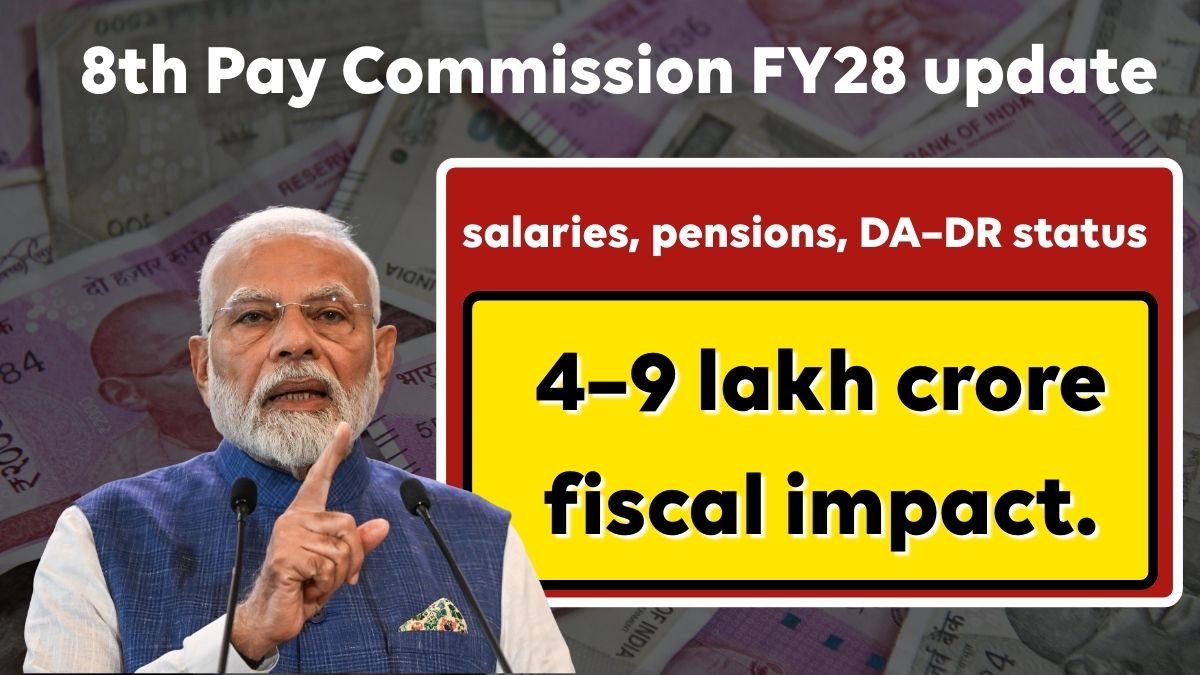
India’s next big fiscal shake-up is slowly taking shape. And if you’re wondering why people from Kolkata to Kochi are suddenly talking about FY28, here’s the thing — the 8th Pay Commission (8th CPC) is finally gearing up, and early estimates suggest the financial hit could be massive. 8th Pay Commission set to reshape FY28 finances
Neelkanth Mishra, a member of the Prime Minister’s Economic Advisory Council, has shared a fresh reality check. He believes the payout for higher salaries and pensions alone could exceed Rs 4 lakh crore, and once arrears are counted, the bill may push close to Rs 9 lakh crore. That’s a serious weight on both central and state finances.
SUMMARY TABLE: What the 8th Pay Commission Means for FY28
| Area Impacted | What Experts Expect | Possible Effect |
|---|---|---|
| Salary & Pension Revision | Cost may cross Rs 4 lakh crore | Higher recurring outflow for Centre & states |
| Arrears (5 quarters) | May push burden to Rs 9 lakh crore | One-time spike in FY28 |
| Pension Scope | Confirmed to be included | Relief for 69 lakh pensioners |
| DA/DR Merger | No proposal yet | Likely reviewed after CPC submits report |
Why FY28 Could Feel the Heat
Mishra explained at the CII IndiaEdge 2025 Summit that governments will need to balance two difficult priorities:
- honouring pay revision commitments, and
- sticking to India’s long-term debt-to-GDP path.
The tricky part? India shifts to a five-year fiscal framework from FY27, which means FY28 becomes the first test of discipline. Add a low-inflation phase — signalling spare economic capacity — and it becomes even harder to tighten spending aggressively while absorbing a multi-lakh-crore salary overhaul.
Pension Revision: What Was Missing, and What’s Now Confirmed
There’s been a fair bit of tension among government pensioners, especially because earlier documents didn’t clearly mention pension updates. Past Commissions always covered both pay and pension together, so the silence triggered concern.
More than 69 lakh pensioners depend on these revisions for parity with serving staff. Many associations had already written to the government:
“Please don’t leave pensioners out of the 8th CPC.”
What the Government Clarified
- The 8th CPC will recommend changes in Pay, Allowances, and Pension — exactly like earlier commissions.
- This confirmation should put to rest the anxiety since November.
DA & DR Merger: Not Happening Anytime Soon
Another big question floating around is whether Dearness Allowance (DA) and Dearness Relief (DR) will merge with basic pay — a move usually considered when DA crosses the 50% mark.
The Ministry has stated clearly:
- No proposal at the moment.
- Any future decision may only come after the 8th CPC submits its report in 2027.
For now, employees and pensioners will continue with the existing DA/DR structure.
What Happens Next?
As FY28 approaches, the discussion will only intensify. States will begin recalculating their budgets, and the Centre will have to keep a close eye on how this reshapes its borrowing, spending, and deficit targets.
If the cost indeed reaches Rs 9 lakh crore, policymakers will need months of preparation to avoid sudden fiscal pressure.
For millions of government employees and pensioners, however, the major takeaway is simpler:
The 8th Pay Commission is moving, pensions are included, and the next two years will set the tone for the final outcome.